


Cell Disruptor Technology
Effective cell disruption starts with choosing a method that fits your material and downstream goals. Explore our resources on cell disruption using high-pressure homogenization, including the factors that influence process performance and the considerations that matter when moving from laboratory work to production.
Use these insights to evaluate your approach and make more informed processing decisions.
12 Min Read Time
Cell Disruptors for Cell Lysis and Homogenization
Cell Disruption, or Cell Lysis, is the process of breaking the cell wall or cell membrane to release intracellular fluids that contain molecules or particles of interest.
The goal of the cell disruption process is to lyse the cells that are suspended and recover the highest possible viable yield of the molecules (particles of interest).
Microfluidics specializes in the development and production of equipment for cell disruption. For over 40 years, Microfluidics has been the leaders in our field, with our cell disruptors, High Shear Microfluidizer® Processors, being used in a wide range of industries. Microfluidizer® technology has achieved repeatable yields batch-to-batch and can be seamlessly scaled up from lab scale to production volumes.
In 2024, Microfluidics proudly introduced its Microlyser™ technology. Microlyser™ technology provides a unique solution to traditional cell lysis manufacturing challenges. This revolutionary technology was specially designed to achieve optimal cell disruption results, in the biopharma field, on the production scale. Our team are experts in this application, working closely with customers to develop the best solutions and create market-leading products. To support our customers who have a focus on cell disruption, we have developed this knowledge base with best practice articles and guidance.
What Is Cell Disruption and How Does It Work? Key Methods and Applications
An overview of the cell disruption process and its key applications.
Read the Blog
Defining Cell Disruption
Cell disruption is the process of breaking open cells to release intracellular materials, including proteins, enzymes, DNA, RNA and viral vectors, for recovery and further processing. It involves overcoming the cell membrane and, where present, the cell wall so that the target components become accessible. Mechanical methods achieve this through physical forces: bead milling uses grinding action, sonication generates cavitation with ultrasonic waves, and high-pressure methods force a cell suspension through narrow channels or openings. The appropriate approach depends on the organism, the strength of its cell wall, the target molecule and the processing scale.
Effective cell disruption releases the target material while preserving its quality. Adjusting pressure, temperature and processing passes to suit the cell type and sample helps maximize recovery while limiting heat damage and contamination risks.

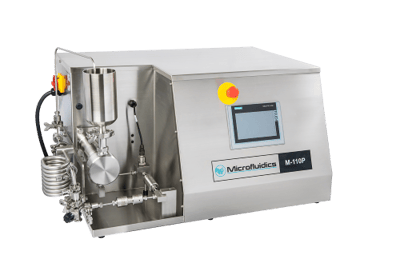
What Are the Most Common Cell Disruption Techniques and Technologies?
A detailed look at the methods used for cell lysis.
Common Techniques for Cell Disruption
Cell disruption techniques use mechanical, chemical, enzymatic or physical approaches to release intracellular materials. Mechanical methods include bead milling, which grinds cells with milling media; ultrasonication, which uses sound-induced cavitation; and high-pressure processing, which forces cell suspensions through narrow openings or channels. Other options include repeated freeze-thaw cycles, manual grinding, chemical lysis and enzyme pretreatment to weaken cell walls before mechanical disruption.
Each technique involves trade-offs in yield, purity, temperature control, repeatability and scalability. Selecting a method requires balancing effective cell breakage with protection of sensitive molecules and the demands of downstream recovery.
The Most Effective Methods for Cell Lysis
A detailed look at the methods used for cell lysis.
Selecting a Cell Disruption Method
Effective cell lysis breaks open cells to release intracellular proteins while preserving their quality for further processing. The aim is not simply to rupture as many cells as possible, but to recover usable material without damaging sensitive molecules through excessive heat or unsuitable pressure conditions.
Common laboratory approaches such as French press, freeze-thawing, manual grinding and ultrasonication prove useful for small samples, but differ in energy requirements, temperature control and their ability to deliver repeatable results as processing volumes increase.
Selecting a suitable method requires matching the processing conditions to the cell type and the sensitivity of the target product. Softer mammalian cells and more resistant yeast cells require different treatment conditions, making control of pressure and temperature important for effective lysis. Cooling helps protect heat-sensitive proteins, while consistent treatment supports reliable recovery. For workflows moving from laboratory research to production, scalability, cleaning and maintenance also need consideration so that increased throughput does not come at the expense of product quality.
Alternative to Freeze-thaw Method for Cell Disruption in Gene Therapy
A comparison of methods for cell lysis for gene therapy applications.
Formulation Methods for Gene Therapy
Recovering viral vectors such as adenoviruses and adeno-associated viruses (AAVs) from cells is an important step in gene therapy manufacturing. Cell disruption must release these vectors while preserving their integrity for further purification. Traditional freeze-thaw processing can achieve this, but repeated freezing and thawing is time-consuming, labor-intensive and difficult to scale. Contamination risks, product losses and inconsistent results can also limit its suitability for larger manufacturing volumes.
Controlled mechanical disruption offers an alternative to freeze-thaw processing. Microfluidizer® technology passes material through fixed-geometry microchannels under consistent pressure and shear conditions to rupture cells while preserving viral vectors. This chemical-free approach can shorten processing time, improve product recovery and reduce demands on downstream filtration. Read more in the blog, or read our application note.
RESOURCE
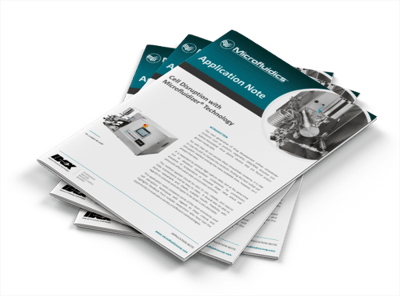
Cell Disruption Comparison of Methods
Compare widely used cell disruption and lysis methods by lysis efficiency, product quality, ease of use, repeatability, maintenance requirements and scalability.
This application note explains the practical differences to help you choose the approach best suited to your application.

High Pressure Cell Lysis with a Microfluidizer® Processor
The key factors to keep in mind when choosing an approach to cell lysis.
What Is the Best Approach to Lyse Cells?
The best approach to lyse cells depends on the cell type, the target product and the processing scale. High-pressure cell lysis with a Microfluidizer® processor uses controlled mechanical disruption to release intracellular material. Processing pressure and the number of passes should be established through trials that measure both cell disruption and product recovery. Higher pressure or additional passes do not necessarily improve recovery and may reduce the activity of sensitive proteins and other biomolecules.
Careful sample preparation and temperature control help achieve consistent results. Sampling after each pass helps identify when sufficient product has been released, avoiding unnecessary processing that can damage the target material and complicate downstream purification. Read our blog via the link opposite for more detailed recommendations about cell lysis and how to achieve the best results.
Advantages of Microfluidizer® Technology for Cell Disruption
Why should you choose a Microfluidizer® Processor for cell lysis?
The Benefits of Microfluidizer® Processors for Cell Disruption
Microfluidizer® processors provide a controlled, scalable approach to cell disruption, helping release intracellular materials while preserving the quality of sensitive proteins and enzymes. Suitable for applications ranging from mammalian cells to tougher yeast and fungi, the technology delivers consistent processing conditions from laboratory development to production.
These benefits extend beyond cell lysis. Effective temperature control helps protect sensitive products, while lower-viscosity lysates and readily separable cell debris can simplify downstream filtration and centrifugation. Straightforward operation and cleaning also support day-to-day processing to streamline research and development. Learn more about these in detail in our blog.
Creating Quality Enzymes for Diagnostic Tests
Maximizing enzyme yields with the right cell disruption method.
Scalable Technology for High Quality Enzymes
High-quality enzymes are essential for molecular diagnostic tests that amplify DNA or RNA to detect infectious diseases. Producing these enzymes from bacteria, including recombinant E. coli, requires cell disruption to release them while preserving their activity. The choice of lysis method therefore affects both the yield of active enzymes and the ease of downstream purification.
Microfluidizer® processors use controlled, consistent shear to rupture cells and release intracellular enzymes. Short residence times, effective cooling and a limited number of processing passes help protect enzyme activity during recovery. Our Interaction Chamber™ technology also supports scale-up from laboratory development to full production, helping manufacturers transfer established processing conditions as demand grows. Read our blog to learn more about producing quality enzymes for diagnostic tests.
Equipment for Production Scale Cell Disruption
Learn more about our solution for large volume cell disruption.
Production Scale Cell Disruption With the MP350 Microlyser™
Traditional mechanical methods, for production scale cell disruption, present significant challenges which can cause inconsistent qualities of results, contamination risks, clogging and filtration issues. These factors not only impact the product but can also require additional production time and higher maintenance costs.
The Microfluidics MP350 Microlyser™ processor is uniquely designed to overcome some of cell disruption's most complex production scale manufacturing issues. Microlyser™ technology is an enhanced biopharma solution for optimal cell disruption yields.

CELL DISRUPTION
Frequently Asked Questions
Intact cells form a physical barrier around intracellular products. Depending on the organism, this barrier includes a cell membrane, a cell wall or additional structural layers. Cell disruption breaks these structures to release the target material for recovery and purification.
The degree of disruption required depends on the product being recovered. Soluble proteins, lipids, pigments and particulate materials such as inclusion bodies can require different processing conditions. An effective process therefore balances sufficient product release with preservation of the target material and practical separation from cell debris.
Cell disruption should be developed alongside downstream recovery and purification, rather than optimized for cell breakage alone.
Cell disruption releases intracellular materials for subsequent recovery and purification. Depending on the organism and application, these can include:
- Proteins
- Enzymes
- Nucleic acids, including DNA and RNA
- Lipids
- Pigments
- Metabolites
- Vitamins
- Cell organelles
- Inclusion bodies
- Other bioactive compounds
Successful recovery depends on the target material’s location within the cell, the disruption method and the downstream separation process. Mechanical cell disruption can also release cellular debris and unwanted intracellular components, so effective processing must balance product release with product integrity and practical purification.
Mechanical cell disruption can be used to break open most cell types include bacterial, yeast, fungal, algae, plant, insect and mammalian cells to release intracellular materials. The processing conditions required vary according to the cell structure and the sensitivity of the target product.
Microfluidizer® processors accommodate a range of cell types through controlled shear, adjustable pressure and efficient cooling.
Cell disruption efficiency is measured by assessing cell breakage and the release of the target intracellular product. No single measurement is suitable for every application. Depending on the cell type and processing objective, methods include:
- Microscopy and cell counting to assess changes in cell structure and the number of intact cells remaining.
- Viability or membrane-integrity staining to identify cell damage, although loss of viability does not necessarily confirm complete disruption.
- Turbidity and particle-size measurements to monitor changes in the cell suspension and resulting debris.
- Product-release assays to measure the quantity of the target protein, enzyme or other intracellular material released.
Sampling after different numbers of passes helps to identify effective processing conditions without over-processing. Product yield is often more important than cell breakage alone. Measuring both disruption and product recovery helps establish whether the process releases the target material while preserving its quality and suitability for downstream purification.
Complete cell disruption may be achievable through optimizing processing conditions. However, those conditions can lead to over processing, which causes denature and loss of the product of interest. Therefore, the degree of disruption should be balanced and optimized to aim for maximum product recovery.
RESOURCES
Related Resources
Explore our articles related to cell disruption.
- Cell Disruption Equipment
- App Note: Microfluidizer® Technology for Cell Disruption
- App Note: A Comparison of Techniques for Cell Disruption
- App Note: Microfluidizer® Technology for Gene Therapy
- App Note: Cell Disruption Peer Reviews
- What Is Cell Disruption and How Does It Work? Key Methods
- MP350 Microlyser™ Processor - A Cell Rupture Production Scale Solution
- Creating Quality Enzymes for Diagnostic Tests
- Cell Disruption With High-pressure Homogenizers
- Alternative to Freeze-thaw Method for Cell Disruption in Gene Therapy
- The Most Effective Methods for Cell Lysis
- What Are the Most Common Cell Disruption Techniques and Technologies?
- Advantages of Microfluidizer® Processors for Cell Disruption
- High Pressure Cell Lysis with a Microfluidizer Processor
Microfluidics
Since 2011, Microfluidics has been a member of the IDEX Corporation family of companies. IDEX is a global leader in highly engineered systems and components.
About us