
A Comparison of Techniques for
Cell Disruption
This application note compares several widely used cell disruption and cell lysis methods against the criteria that matter most in development: lysis efficiency, impact on product quality, ease of use, repeatability, maintenance demands, and scale-up potential.
See how different cell disruption methods compare in real process terms, helping you assess which approach best suits your specific application.

 Fast
Fast
Processing
 High
High
Yields
 Improved
Filtration
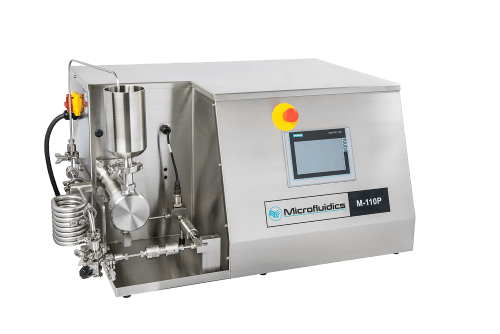
Application
Cell Disruption
Industry
Biopharma
Key Products
BACKGROUND
How does cell disruption support drug development?
Cell disruption plays a critical role in modern drug development because many high-value biological materials are located inside the cell rather than secreted into the surrounding medium. These intracellular products can include proteins, enzymes, organelles, DNA, RNA, and viral vectors such as adeno-associated virus (AAV). When the target material remains contained within the cell, effective cell lysis is required to release it in a form that can be recovered, analyzed, and used in downstream development or manufacturing.
Different cell lysis methods can produce very different outcomes in terms of rupture efficiency, product recovery, heat generation, shear exposure, contamination risk, operating cost, and scalability. A method that performs well at small laboratory scale may not translate efficiently to pilot or production environments. For that reason, process teams evaluating methods for cell disruption typically need to consider not only whether a technique can break cells open, but how reliably it can do so while preserving the quality of the released intracellular material.
This is especially important in biopharmaceutical and advanced therapy workflows, where sensitive intracellular components may be affected by excessive temperature rise or unnecessarily high shear forces during cell disruption. If the cell lysis method is too aggressive, the process can reduce yield, lower protein activity, or compromise the integrity of the target product. If it is too mild, the result may be incomplete lysis and poor recovery. The most effective method is therefore one that balances rupture efficiency with product protection.
A useful comparison of cell disruption methods should also consider practical manufacturing. Beyond performance, teams often need a cell lysis process that is straightforward to operate, easy to clean, repeatable across batches, and adaptable to different process volumes and cell types. These factors become even more important when moving from research-scale screening to larger-scale development, where reproducibility, throughput, and process control directly influence development timelines and commercial feasibility.
Common methods for cell disruption include high-pressure mechanical approaches, ultrasonication, freeze-thawing, chemical lysis, and manual techniques such as mortar and pestle. Each method disrupts cells differently, and presents its own trade-offs. Some methods suit small-volume analytical work, while others are better aligned with higher-throughput, scalable bioprocessing. Understanding how different methods for cell disruption compare helps process developers identify the most appropriate approach for their product, process conditions, and scale.
APPLICATION
Comparing methods for cell disruption
| Microfluidizer | Homogenizer | Bead Mill | French Press | Sonication | |
| Principle |
Fixed-geometry interaction chamber and constant pressure pumping system. |
Variable valve geometry in combination with less constant pressure profile. |
Cylindrical rotating shell partly filled with beads that fall onto the material to be ground. |
Pressurization and decompression depends on a manually operated valve. |
Uses cavitation to generate shear typically much lower than high pressure methods. |
| Continuous | Yes | Yes | No | No | No |
| Scalable | Yes | Limited | Yes | No | Limited |
| Optimal Temp Control | Yes (cooling coils or heat exchangers) | Yes (cooling coils or heat exchangers) | No | No | No |
| Contamination Free | Yes | Uncertain | No | ||
| Minimum Volume | 1ml | 10ml | 1ml | 1ml | <1ml |
| Constant Shear Rate | Yes | No | No | No | No |
Compared to alternative cell disruption methods, the Microfluidizer® Processor offers several advantages to benefit from:
- Ease of use
- Easy to clean
- Reliable
- Quick processing time
- Lowest required pressures
- Efficient cooling for high yields & activity levels
- No contamination
- Repeatable and scalable
- Usable for variable cell suspension volumes and a large variety of cell types
- Customers report lower viscosity and turbidity after processing which simplifies downstream processing
CONCLUSION
Why Microfluidizer® technology is the preferred method for cell disruption
This comparison shows that cell disruption methods differ significantly in how they apply force, control processing conditions, and support scale-up. The Microfluidizer® stands out for its fixed-geometry interaction chamber, constant pressure profile, and precisely controlled shear rates, which help deliver continuous operation, scalability, temperature control, and contamination-free processing. By contrast, other methods such as homogenizers, bead mills, French press systems, and sonication each present limitations in consistency, scale, temperature management, or product protection. For process teams selecting a cell lysis method, the key consideration is not only whether cells can be disrupted, but how reliably the method can support product recovery, process control, and practical development from laboratory work through larger-scale manufacturing.
Cell Rupture Success Stories With a Microfluidizer®
Dr. Petra Ungerer, Lab Manager, School of Biological & Chemical Sciences at Queen Mary University London, UK
"We identified Microfluidizer® technology as a replacement for a high-pressure homogeniserfrom another manufacturer, which had been unreliable and failed to achieve sufficient lysis of our tough yeast cells even after very many passes. We selected the LM20 Microfluidizer® not only because it efficiently lysed a broad range of cell types but also was incredibly simple and easy to use which is very important as many different people need to use the machine regularly. We also much appreciated the knowledgeable technical and applications support provided by the local representative which has enabled us to fully exploit the considerable capabilities of the LM20 Microfluidizer®.”
Johannes Raff, Ph.D., at the Institute of Radiochemistry at Forschungszentrum Rossendorf, Germany
They used a French pressure cell, ultrasonification, a glass bead mixer mill, and homogenizers to disrupt various bacterial cells until a colleague told him of a high-shear fluid processor that was much more efficient and easy to use. Raff tested the Microfluidizer® processor and stated: “We can process 200 ml of 1:1 solution continuously in five to ten minutes versus constantly refilling the chambers of other types of equipment over a two-to three-hour time span. The Microfluidizer® disrupts 99% of the bacteria cells in two to three passes versus the five to ten passes other cell rupturing equipment requires.”
Prof. Thomas Schwartz, MassachussettsInstitute of Technology (MIT) (USA)
“I highly value the Microfluidizer® Machine for cell disruption. It’s very reliable, processing hundreds of liters of our diverse cell suspensions with very few problems. My colleagues and I have used two different brands of competitive equipment, but now have switched exclusively to Microfluidics. The difference is night and day. Yields of usually difficult, otherwise poorly soluble proteins are much higher after disruption with the Microfluidizer® processor. Maintenance requirements are also much lower now. With the competitive systems, maintenance was a constant problem and required several service visits per year. Overall, I am very happy that I switched to the LM20 Microfluidizer® processor.”
Dr. Sven Hennig, Associate Professor Structure Chemical Biology-Head of X-ray Crystallography, Vrije Universiteit Amsterdam, Netherlands
"We used to sonify our bacterial samples. But only with the Microfluidizer® it is possible for us to lyse sample sizes from a few ml up to a few hundred ml. Additionally, our samples don't heat up that much anymore during cell lysis. For us it is the most efficient and easy way to rupture cells in a reproducible manner, so cell lysis is no trouble anymore. We are happy to have it."
Dr. Julien Hiblotat Max-Planck-Institute for medical research in Heidelberg, Germany
"The Microfluidizer® allows us to reach high performance in producing active protein for biochemical and structural biology studies. We use the Microfluidizer® for bacterial cell lysis, it is the method of choice when it comes to difficult proteins or large culture volume. The equipment is easy to use, easy to maintain and offers reliable results."
Dr. Michael Chen, Nucleraco-founder & CCO
Nuclerais a synthetic biology company developing a next-generation DNA synthesis and automation platform based on engineered terminal deoxynucleotidyl transferases (TdT) to enable the production of gene and genome libraries. The company already boasts 3 patents to their name and has a long-term vision to create a DNA synthesis platform capable of manufacturing genomes ondemand. The company chose the Microfluidizer® LM20 for cell disruption, or the releasing of biological molecules such as proteins and enzymes, from inside the cell. “I had been using a competitor system to perform 100-500 ml E.coli lysis for more than a year during my PhD. When I switched over to a Microfluidizer® lysis machine, the difference was night and day. Breakage efficiency was higher and instrument blockage from particulates in the lysis buffer was far less problematic. A Microfluidizer® machine made processing E.coli lysates much more convenient, so I could worry about enzyme function rather than production.”
James Wright, Protein Scientist - Abcam Plc, UK
"The LM20 Microfluidizer® processor offers superior lysis over traditional methods of cell disruption with an efficient system to reduce internal blockages. The scalability of the design means that the forces experienced by cells will not change if the sample volume increases. I can, therefore, have confidence that the sample quality, yield and processing times won’t be impacted by scaling up my lab processes. Digital controls allow the system pressure to be set more easily and accurately compared to alternative manual processors, reducing the potential for errors and increasing reproducibility. The in-depth user training, and easy operation and maintenance procedures have been extremely beneficial. I feel confident to troubleshoot and perform preventative maintenance without having to call the support teams -it doesn’t feel like a ‘black box’ machine. I would recommend the LM20 Microfluidizer® as an essential tool for cell disruption.”
Get your free copy.
Open this application note in a downloadable format.
FURTHER RESOURCES
You may also be interested in these articles:
Microfluidizer® Technology for Cell Disruption
See how the choice of cell disruption method affects key properties such as particle size, disruption efficiency, and protein release.
.webp?width=400&height=400&name=Microfluidizer%C2%AE%20Technology%20%20for%20Cell%20Disruption%20(1).webp) Explore
Explore
Blog: What is Cell Disruption and What are the Methods?
Learn more about the process of breaking cells open (otherwise known as lysing) in order to obtain the intracellular fluid.
 Explore
How it Works: Microfluidizer® Technology
Microfluidizer® Technology delivers superior results by combining a constant pressure pumping system with a unique fixed-geometry Interaction Chamber™.
 Explore