
Proven Microfluidizer® Technology
Cell Disruption Peer Reviews
Don't just take our word for it, see the proof. Microfluidizer® Processors make it possible to achieve the highest levels of cell rupture and product recovery due to the equipment's ability to apply constant, controlled shear rates.
Read our compilation of peer-reviewed publications that highlight the performance and advantages of using a Microfluidizer® processor for cell disruption.

 Fast
Processing
 High
Yields
 Temperature
Control
Application
Cell Disruption
Industry
Biopharma
INTRODUCTION
How do Microfluidizer® processors perform at cell disruption in practice?
The below information compiles a number of peer reviewed publications and research reports that explore the performance and advantages of using Microfluidizer® technology for cell disruption. In each case we present an abridged summary of the paper and its conclusions.
PUBLICATION SUMMARY #1
Evaluation of the Microfluidizer for Cell Disruption of Yeast and Chlorella by E. UeraSantos, C.D. Copple, EA Davis and WG. Hagar
Temperature, pressure, pH and medium composition directly affect the integrity and yield of products recovered after cell disruption. Methods developed for small-scale processing can be difficult and costly to scale up and may not meet production-scale process control requirements. Choosing a cell disruption method early in development therefore has important implications for the project’s commercial value and viability at full production.
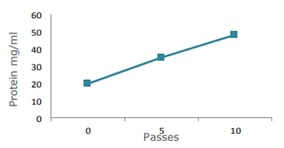
Figure 1: Solubilization of protein with increasing passes at 20,000 psi and 10°C number of passes (Microfluidizer at 20,000 psi)
Processing
Miller Brewing Company supplied the yeast (Saccharomyces cerevisiae) as a frozen cake. The yeast was resuspended in phosphate-buffered saline at 11% solids, then processed using a Microfluidizer® processor and a French press at the same pressure for a direct comparison.
| Microfluidizer M110Y | French Press | |
| Pressure | 20,000 psi with back pressure | 20,000 psi |
| Number of Passes | 8 | 7 |
| Conditions | Increased cooling temp. from 5°C to 10°C improved solubilized protein yield | |
| Results | 92% breakage | 50% breakage |
Conclusion
In this study, the Microfluidizer® processor was faster and easier to use. After a similar number of passes, it achieved a cell rupture rate more than 80% higher than the comparison method. Its gentle cell disruption also delivered up to 2.5 times the yield of solubilized protein.
PUBLICATION SUMMARY #2
Characterization of E. coli Cell Disintegrates from a Bead Mill and High Pressure Homogenizers by Irene Agerkvist and Sven-Olof Enfors
This publication compares the performance of three cell disruption methods: Microfluidizer processor, Bead Mill and High Pressure Homogenizer (HPH) across a range of parameters:
Viscosity
Cell lysate viscosity differed significantly between disruption methods. After one pass through the high-pressure homogenizer (HPH), viscosity was very high but fell rapidly with additional passes. By comparison, the Microfluidizer® processor produced a low-viscosity lysate after just one pass, with further reductions after subsequent passes.
Filtration
In this study, the cell lysate produced by the Microfluidizer® processor had the shortest filtration times and separated more effectively during centrifugation than the lysate from the high-pressure homogenizer (HPH). Additional passes through the HPH reduced separation performance.
Protein Release
The reason for disrupting the cells in the first place. The Microfluidizer technology gave the highest overall protein release, effectively plateauing at around 5 passes.
Particle Size Distribution
In this study, changing the residence time in the bead mill did not affect particle size distribution. The bead mill produced two comparable peaks, representing large and medium-sized particles. The high-pressure homogenizer (HPH) produced a medium-sized particle peak and a second peak of smaller particles associated with viscosity and filtration problems. By comparison, the Microfluidizer® processor produced a single medium-sized particle peak, resulting in low viscosity and better separation.
Temperature
High temperatures can denature proteins, affecting product recovery. In this study, Agerkvist and Enfors reported significantly higher processing temperatures with the high-pressure homogenizer (HPH) than with the Microfluidizer® processor, which delivered the highest yield of β-galactosidase.
However, exit temperatures of 40–50°C are not necessarily unacceptable: protein denaturation depends on both temperature and exposure time. The reported residence time in the Microfluidizer® processor was just 25–40 milliseconds, much shorter than in the HPH.
| Dry Weight BioMass g/L | Protein (%) | ß galactosidase (%) | |
| Bead Mill | |||
| 2 min | 49.5 | 62 | 62 |
| 3 min | 49.5 | 72 | 74 |
| 4 min | 49.5 | 79 | 79 |
| HPH | |||
| 1 pass | 48.4 | 66 | 58 |
| 2 passes | 48.4 | 76 | 75 |
| 3 passes | 48.4 | 82 | 78 |
| Microfluidizer | |||
| 1 pass | 47.6 | 63 | 61 |
| 2 passes | 47.6 | 79 | 76 |
| 3 passes | 47.6 | 88 | 87 |
| 5 passes | 47.6 | 96 | 97 |
| 10 passes | 47.6 | 100 | 100 |
The HPH heats the sample higher & longer – hence the increased denaturation that can be seen in the yield data.
| °C | Microfluidizer | HPH |
| Inlet | 8-10 | 6-8 |
| 1 pass | 23 | 21 |
| 2 passes | 27 | 31 |
| 3 passes | 28 | 40 |
Conclusion
Microfluidizer® technology achieved the highest protein and enzyme release of the three methods, approaching 100%, and produced a cell lysate that was easier to purify. The other methods produced smaller particles and broader particle size distributions, which complicated downstream processing. Smaller particles were harder to separate from proteins during centrifugation, while the broader size distributions contributed to filter blockage.
PUBLICATION SUMMARY #3
Evaluation of the Microfluidizer for Cell Disruption Purification of Cytochrome C Oxidase from Microfluidizer Processed Yeast by E. Llera-Santos, E.A. Davis, S. Ackerman and W.G. Hagar
Publication Summary #1 describes the most efficient operating conditions identified for disrupting yeast (Saccharomyces cerevisiae).
This third study examined the isolation and activity of the temperature-sensitive enzyme cytochrome c oxidase (EC 1.9.3.1). Solubilized protein was measured using the Bio-Rad Standard Assay, while enzyme activity was measured using a standard spectrophotometric method.
Processing
The study used a 10-liter, semi-industrial batch of baker’s yeast in culture medium. The suspension was cooled to 4–6°C, then processed with a Microfluidizer® processor and a high-pressure homogenizer, both operating at 10,000 psi. The temperature-sensitive enzyme cytochrome c oxidase was isolated, and its activity was measured using standard procedures.
| Microfluidizer M110Y | HPH | |
| Pressure | 10,000 psi | 10,000 psi |
| Number of Passes | 5 | 2 |
| Conditions | 20 foot cooling coil immersed in ice water | |
| Results | Yielded 5.87g of submitochondrial particle (SMP) protein per kg of dry yeast after 53% disruption | Yielded 1.4 to 2.2g SMP per kg dry yield at 58% disruption |
Conclusion
The Microfluidizer® processor yielded approximately 3 times as much sub-mitochondrial protein (SMP) compared to the HPH, despite slightly less initial breakage, indicating loss or damage of fewer particles during processing.
PUBLICATION SUMMARY #4
Research report by Dr. Paul Sallis, University of Kent, England
This report shows the effect of the Microfluidizer technology on protein recovery from three different bacterial: Agrobacterium Sp., C. Glutamincum, and B. Lichenformulis.
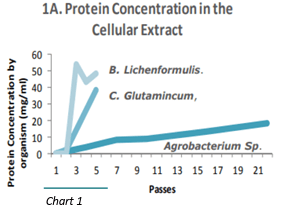
Figure 2: Protein concentration in the cellular extract
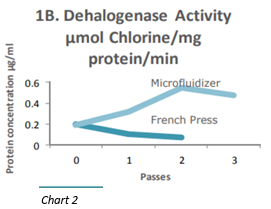
Figure 3: Dehalogenase activity µmol chlorine/mg protein/min
Experiment #1
In Experiment 1A (Figure 2), the amount of protein recovered in the extract increased with each pass through the Microfluidizer® processor. Agrobacterium sp. cells were processed at a lower pressure and released less protein, even after many more passes. This suggests that pressure and the number of passes should be optimized for each cell type.
Experiment 1B (Figure 3) compared the Microfluidizer® processor with a French press. Under the conditions tested, the Microfluidizer® processor achieved six times the protein recovery of the French press, which showed product losses after the first pass.
Experiment #2
The results in the table below show how Microfluidizer® technology can increase protein recovery while maintaining enzyme specific activity. In these experiments, the M-120E processor operated at 15,000 psi. Additional passes increased the amount of enzyme recovered without changing its specific activity, increasing the total amount of usable enzyme.
The results also highlight the importance of selecting appropriate processing conditions. Under the conditions tested, the M-110Y processor operating at 20,000–23,000 psi released as much protein in one cycle as the M-120E operating at 15,000 psi over 21 passes.
| Number of Passes | Protein Concentration (Mg/ml-1) |
Specific activity (µmol Chlorine) |
Dehalogenase Units Released Protein/min |
| 1 | 16.3 | 0.363 | 4734 |
| 2 | 20.5 | 0.341 | 5529 |
| 3 | 24.3 | 0.341 | 6629 |
| 4 | 28.0 | 0.323 | 7243 |
| 5 | 28.3 | 0.3 | 6792 |
PUBLICATION SUMMARY #5
Research report by Maurice Gaucher, University of Calgary, Canada
The following data compares three mechanical disruption techniques- the Microfluidizer technology, the Braun Cell Homogenizer and the APV/ Gaulin Homogenizer.
Experiment #1
m-Hydroxybenzylalcohol dehydrogenase activity in cell free extracts as produced by three different methods of disruption.
Experiment 1 shows that all three methods appear to be similar in their ability to disrupt cells as determined by protein release (mg. protein/g. dry cells). However, the Microfluidizer technology and Braun Bottle are associated with higher levels of enzymatic activity (approximately 40% higher) as well as efficient product temperature control. Given that the Braun Bottle method is only suitable for small scale preparations (10-20 ml), the method of choice for larger preparations would be the Microfluidizer technology.
| Method of Disruption | Temperature of Extract1 |
Protein Content |
Enzymatic Activity |
Units/mg Protein2 |
| Microfluidizer Processor | 5°C | 253 | 216 | 0.82 |
| Braun Cell Homogenizer | 3°C | 224 | 219 | 0.98 |
| Manton Cell Homogenizer | 15.5°C | 225 | 128 | 0.57 |
Experiment #2
6-Methylsalicylic Acid Synthetase activity in cell free extracts as produced by three different methods of cell disruption.
In Experiment 2, extracts produced using Microfluidizer® technology showed 100–200% higher enzyme activity than those produced using the Braun bottle method or APV/Gaulin homogenizers under the conditions tested.
| Method of Disruption | Temperature of Extract |
Protein Content |
Enzymatic Activity |
Units/mg Protein3 |
| Microfluidizer Processor | 7°C | 138 | 14.2 | 103 |
| Braun Cell Homogenizer | 5°C | 179 | 5.4 | 29.5 |
| Manton Cell Homogenizer | 16°C | 138 | 7.4 | 160 |
1 Temperature was increased immediately after cell disruption
2 One unit of activity is the amount of enzyme required to catalyze the formation of 1 µmole of NADP 1 per minute at 30°C
3 One unit of activity is amount of enzyme required to catalyze the formulation of 1 µmole of 6-methyl-salicylic acid per minute at 30°C
PUBLICATION SUMMARY #6
Evaluation of the Microfluidizer for Cell Disruption of Yeast and Chlorella· by E Llera-Santos, C.D. Copple, E.A Davis and W G. Hagar
This application presents a difficult extraction for photosynthetic pigments since it is resistant to standard extraction methods which involve grinding with a mortar and pestle.
A 2,6 dichlorophenol indophenol (DCPIP) reduction assay was used to evaluate the functionality of the isolated thylakoid membranes. The assay dye is blue in its oxidized state and acts as a “sink" for the electron flow of Photosystem II; thus, the reduction of the dye is a measure of the integrity of the chloroplast preparation.
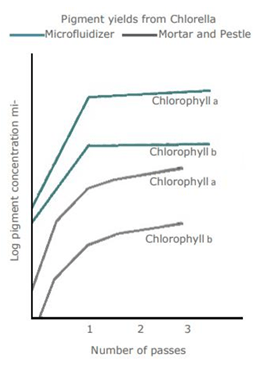
Figure 4: Cell suspensions of the algae, Chlorella pyrenoidosa. diluted in phosphate buffered saline
Conclusion
1 pass through the Microfluidizer technology achieved 95% disruption with almost complete extraction of both chlorophyll a and b.
Yield of pigment/cell using the Microfluidizer processor was more than 6 times that achieved by grinding for 10 minutes with a mortar and pestle.
Results showed desired reduction of DCPIP was achieved in 10 minutes using a 1 pass preparation through the Microfluidizer processor.
| Microfluidizer M110Y | Mortar and Pestle | |
| Pressure | 11,000 psi | |
| Number of Passes | 1 | 1-10 minutes grinding with mortar and pestle |
| Conditions | Ice water continuously running in the cooling coils |
| Sample Description |
Processing Conditions | Results and Comments | |
| Pressure (psi) | # Passes | ||
| Meningococcal cell paste (0.4%) in buffer | 1000 | 1 | Cooling used to maintain I0°C temperature. Complete rupture achieved in one pass. |
| Mammalian cells | 3000-5000 | 1 | Complete rupture of cells and easy separation of parasite within the cell achieved in 1 pass on laboratory model H-5000. |
| E. coli (10%) in buffer | 12,000-18,000 | 1 | 90% rupture achieved. Results scaled linearly from lab to production. |
| Penicillium urticae |
13,000 | 40% more activity achieved than when processed on conventional homogenizer for m-hydroxybenzyl alcohol and 100 to 200% more activity for 6-methylsalicylic acid. | |
| Arthropod blood cells |
5000 | 3 | Cooling used. 10 micron spheres throughout gelatin matrix shattered with no visible cellular fragments. |
| 15,000 | 1 | Same as above but required only 1 pass so continuous processing possible. | |
| Baker's yeast | 20,000 | 10 | Cooling used. 95% rupture of yeast cells achieved. |
| Brewer's yeast (10%) in water |
10,000 | 1 to 10 | Cooling used to keep temp below 5°C, in water 35% rupture at 1 pass and 63% at 10 passes, 71 % rupture at 1 pass and 98% at 10 passes. |
| 20,000 | 1 to 10 | Yield of enzyme significantly better than that achieved with other processing techniques including French press. | |
| M. lysodeiktuis (1%) in deionized water | 25,000 | 25 | Cooling used. Approximately SO% rupture achieved. Superior to other mechanical techniques. |
Get your free copy.
Open this application note in a downloadable format.
FURTHER RESOURCES
You may also be interested in these articles:
Microfluidizer® Technology for Cell Disruption
See how the choice of cell disruption method affects key properties such as particle size, disruption efficiency, and protein release.
 Explore
Blog: What is Cell Disruption and What are the Methods?
Learn more about the process of breaking cells open (otherwise known as lysing) in order to obtain the intracellular fluid.
 Explore
Resources for Cell Disruption & Options for Methods
Explore resources on cell disruption and cell lysis using high-pressure homogenization, including process performance and scale up.
 Explore